How to set SLAs for outsourced procurement operations
A service-level agreement is only useful if it is credible. Targets that are too tight create constant failure and disputes. Targets that are too loose hide poor service. Here is how to set SLAs that both sides can stand behind.
1. Define the activity precisely
Write each SLA around one activity with a clear start and finish. “Acknowledge a supplier RFQ” is measurable. “Support sourcing” is not. Define the trigger, such as a request logged in the system, and the evidence of completion, such as a status change or a document.
2. Set a turnaround target based on real effort
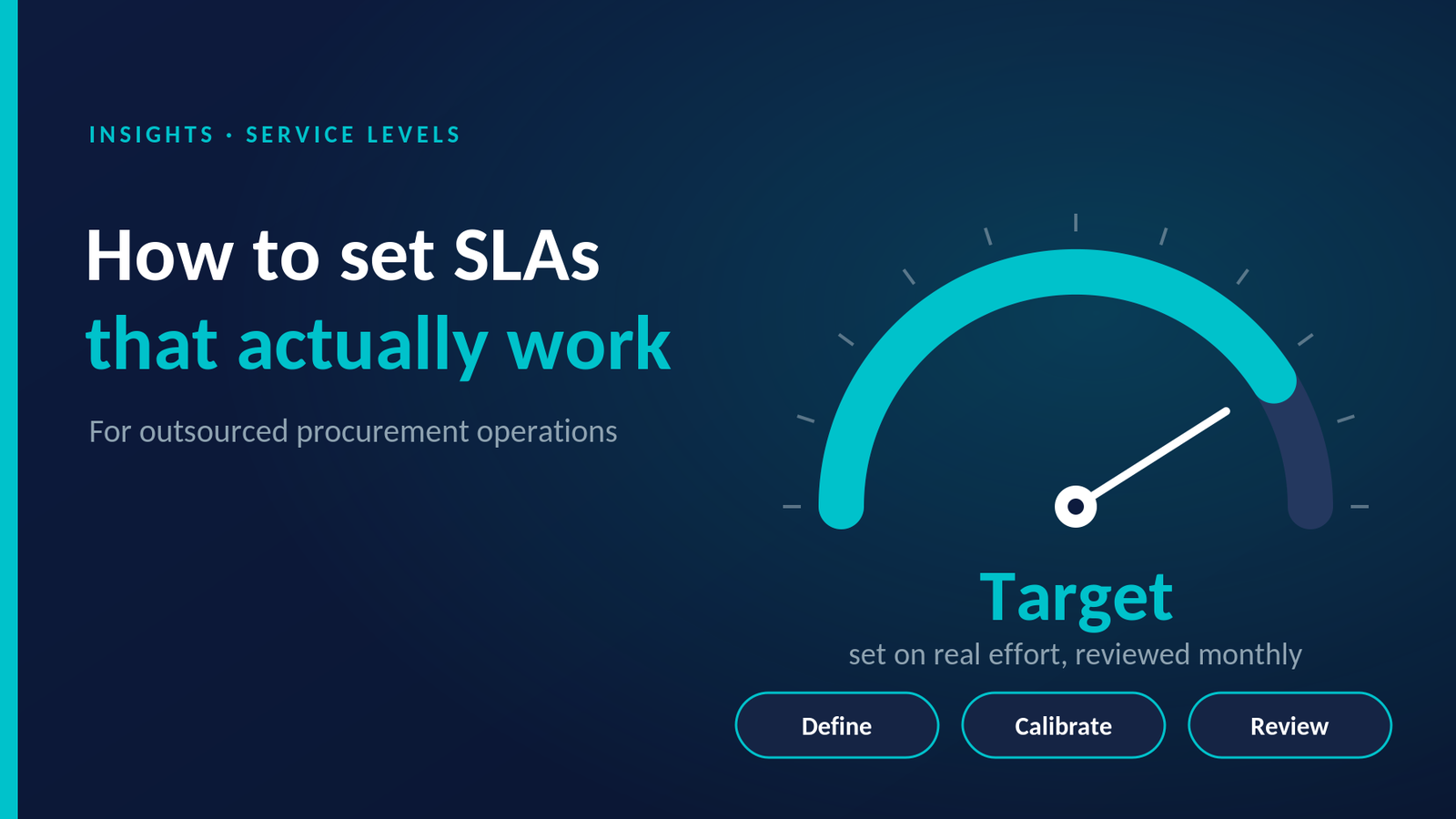
The most common mistake is setting targets from a spreadsheet instead of from observed work. Measure how long each activity actually takes, including the waiting time that is outside anyone’s control, then set the target. If you need to start before you have data, start with an interim target and agree a date to recalibrate.
Typical targets are expressed in working days, for example one day for supplier registration, three days for PO acknowledgement or RFQ acknowledgement, and longer for activities that depend on technical review. The right number depends on your process.
3. Separate what the provider controls from what it does not
Many procurement delays come from outside the provider: suppliers who do not respond, approvers who are slow, or system outages. A credible SLA model includes exception codes for these cases, with documented follow-ups as evidence. Without them, the provider is blamed for delays it cannot control, and the real bottlenecks stay hidden.
4. Measure monthly and review jointly
Report the percentage of activities completed within target, by activity, every month. Pair the numbers with ageing views, so open items are visible before they breach. A short monthly review with both teams is more valuable than a long quarterly one.
5. Expect the first targets to change
In our experience, SLAs set before work begins are usually revised once real volumes and effort are known. That is healthy. Plan a recalibration period, agree how changes are approved, and keep a record of what changed and why.
6. Use SLAs to improve, not only to police
The best use of SLA data is to find the causes of delay: incomplete requests, slow approvers, unresponsive suppliers, or unclear instructions. Fixing those improves results for everyone, including the internal team.
A simple starting checklist
One activity per SLA, with a clear start and finish.
Targets based on measured effort, with a date to recalibrate.
Exception codes for causes outside the provider’s control.
Monthly reporting by activity, plus an ageing view.
A named owner on each side.
Want help defining SLAs for your procurement operations? Talk to our team.
EmpoweringCPO is a team of experienced sourcing and procurement professionals with hands on experience of having worked with many fortune 500 companies. The company was founded in 2011 and since then has executed multiple strategic sourcing projects and have achieved average savings of 10-12% so far. In addition to Strategic Sourcing their other offerings are Spend Analysis, Procurement Intelligence, Procurement Analytics, Best Cost Country Sourcing, Procurement Outsourcing, Built Operate Transfer, Supplier Diversity, Sustainable Procurement, Tail Spend Management, Item Master Optimization, Collective Buying, Compliance Tracking and Managed Procurement Services.
Compliance management is very critical as otherwise the procurement organization may run into a scenario where there is a huge gap between realized savings and reported savings. Many procurement functions estimate large savings numbers when contracts are signed. They also invest significant time and effort in negotiating contracts for necessary goods and services, only to have a third or more of their purchasing dollars flow outside those deals. Some of the obvious fall-outs of non-compliance and maverick purchases are:
Very high prices
Risk of losing out on volume discounts and rebates
As compared to the current contract that was finalized after the sourcing process, the tool helps in tracking:
Vendor Compliance
Price Compliance
The objective of this tool is to ensure that the orders are placed only with the vendors that were shortlisted after the sourcing process and at the same price that was agreed upon and negotiated during and after the strategic sourcing process.