AI in procurement: where analytics actually pays off
Every procurement conference now features AI. The promise is large, but the results depend on something unglamorous: the quality of the data and the clarity of the process underneath. Here is where AI and analytics are delivering value in procurement today, and where to be cautious.
Fix the foundation first
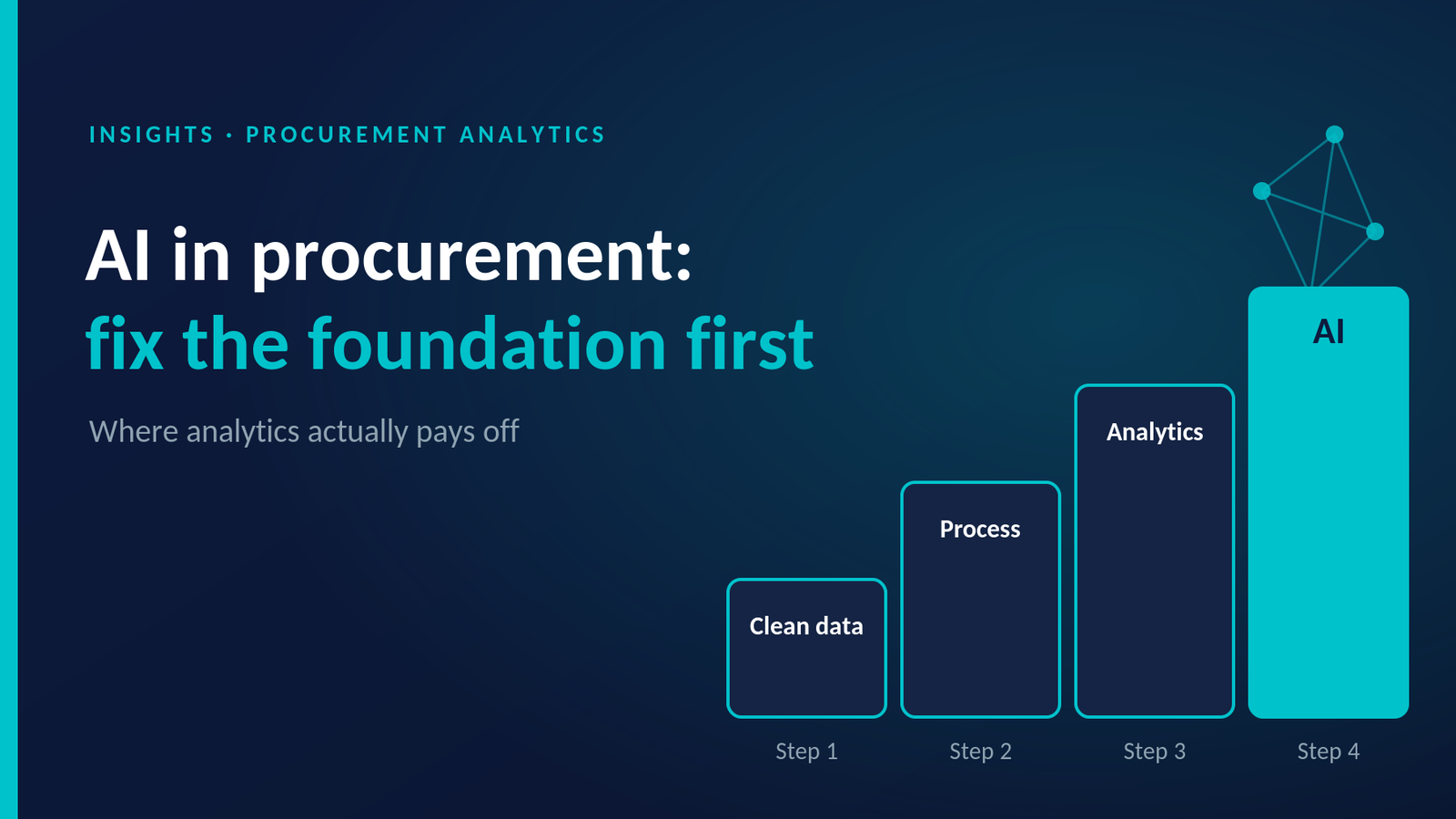
AI works on data. If supplier names are duplicated, items are described differently across plants, and spend is not classified, any model will produce confident but unreliable output. Master data cleansing, a consistent taxonomy and spend classification are not old-fashioned; they are the entry ticket.
Where it pays off today
Spend classification. Machine-assisted classification turns millions of transaction lines into a usable spend view far faster than manual work, with human review of the exceptions.
Opportunity identification. Analytics highlights duplicate items, price variance across locations, and supplier consolidation opportunities that are hard to see in reports.
Savings tracking. Dashboards that track savings against projections show where negotiated savings are leaking.
Drafting and summarising. Assisted drafting of RFx documents, supplier communications and summaries saves time on routine writing, provided a person reviews it.
Early warning. Models that flag late deliveries, ageing requests and unusual patterns help teams intervene earlier.
Where to be careful
Negotiation decisions, awards and supplier relationships still need human judgement and accountability.
Outputs from general-purpose AI tools can sound right and be wrong. Keep a reviewer in the loop.
Confidential supplier and pricing data should not be pasted into tools without clear data-handling terms.
Process first, tools second
The most reliable path to useful automation is to run a process well manually first. When you understand where time is lost, which exceptions recur and what a good result looks like, you know exactly what a tool should do. Tools built this way reflect how procurement really works, rather than how a vendor demo imagines it.
A practical sequence
Clean and standardise master data.
Classify spend and build a trusted baseline.
Measure the current process and its exceptions.
Automate the repeatable, high-volume steps.
Apply AI assistance where there is enough clean data and a reviewer.
Procurement teams that treat AI as an accelerator for a well-run function get results. Those that expect it to fix an unmeasured process usually do not.
Not sure where to start? We can review your data and process readiness in a short discovery call.
EmpoweringCPO is a team of experienced sourcing and procurement professionals with hands on experience of having worked with many fortune 500 companies. The company was founded in 2011 and since then has executed multiple strategic sourcing projects and have achieved average savings of 10-12% so far. In addition to Strategic Sourcing their other offerings are Spend Analysis, Procurement Intelligence, Procurement Analytics, Best Cost Country Sourcing, Procurement Outsourcing, Built Operate Transfer, Supplier Diversity, Sustainable Procurement, Tail Spend Management, Item Master Optimization, Collective Buying, Compliance Tracking and Managed Procurement Services.
Compliance management is very critical as otherwise the procurement organization may run into a scenario where there is a huge gap between realized savings and reported savings. Many procurement functions estimate large savings numbers when contracts are signed. They also invest significant time and effort in negotiating contracts for necessary goods and services, only to have a third or more of their purchasing dollars flow outside those deals. Some of the obvious fall-outs of non-compliance and maverick purchases are:
Very high prices
Risk of losing out on volume discounts and rebates
As compared to the current contract that was finalized after the sourcing process, the tool helps in tracking:
Vendor Compliance
Price Compliance
The objective of this tool is to ensure that the orders are placed only with the vendors that were shortlisted after the sourcing process and at the same price that was agreed upon and negotiated during and after the strategic sourcing process.